Wednesday, January 29, 2025

Collage In My Lap

Larry Wolf, Collage in My Lap (2025)

Shared Queer Space

From 2003 - 2014 the house I lived in at 144 Powers was the central gathering point for socializing and artmaking and it really was my muse. I began photographing friends in the kitchen and backyard. I then moved to photographing in my bedroom, where the sheets and pillows where my friends sat became a recurring landscape and an important foundation for the work. So bringing some of these images into the Alice Austen House definitely resonates with that history of domestic portraiture, friendship and intimacy in a home which becomes a shared, queer space. ...

The mid-2000s, when I began my first portrait projects, when I was enmeshed within the Queer Zine revival, the debut of BUTT Magazine and its countless spin-offs, and the emergence of online social networking sites Friendster, Myspace, Manhunt and Adam4Adam.

I was distributing my work through zines and online, and the digital dissemination of the work immediately left the realm of my control and authorship. My interest quickly shifted from straight portraiture to the ways in which queer portraiture was being used and recontextualized, how the same portrait could serve both as artwork in one context and as solicitation in another.

... in retrospect, it is interesting how I found stability through the discovery of a history of photographic portraiture's relationship to literature. In literature the author and the subject more easily slipped, swapped places, lingered in the space where the roles co-exist.

A Note on the Photograph

The photograph is of the objects in my lap while flying home from a weekend in New York as seen by my dual-lens camera. 

The objects include the catalog for Paul Mpagi Sepuya's exhibition, 144 Powers, at the Alice Austin House, 2022. 

Friday, January 24, 2025

Fire Escape - Postcard from the Edge

Larry Wolf, Fire Escape - Postcard from the Edge (2024)

... because we need to have a place for important conversations when our lives, and the world, are on aflame ...

with inspiration from Ocean Vuong, The Weight of Our Living: On Hope, Fire Escapes, and Visible Desperation (Rumpus, 2014), my blog from 2020

Postcards from the Edge

This postcard was created for the annual fundraiser for Visual AIDS, seen here along with some of the 1583 other postcards donated this year.


Friday, January 17, 2025

Illusion of an Ideal

Larry Wolf, Illusion of an Ideal (2024)

In the subterranean spaces of a house is a spotlit model of the house, a cleared space in the underground rubble, a self within the self. Beyond, a barred window. What is abandoned? What is preserved? What is protected? What is imprisoned?

Friday, January 3, 2025

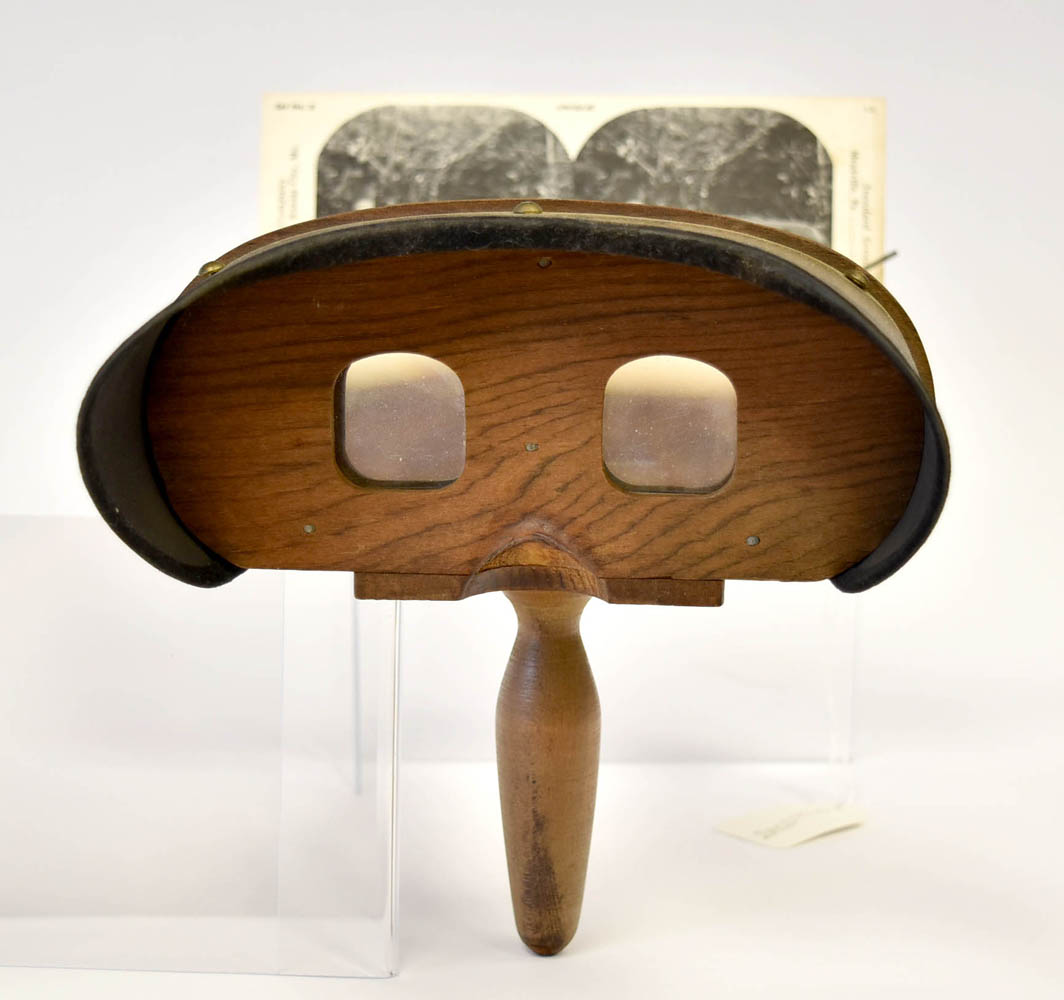
VR in1859

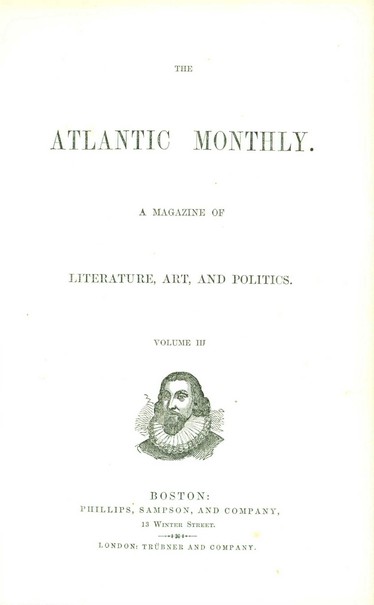
On Photography and Stereographs - Oliver Wendell Holmes, The Atlantic (June 1859)

Oh, infinite volumes of poems that I treasure in this small library of glass and pasteboard! I creep over the vast features of Rameses, on the face of his rock-hewn Nubian temple; I scale the huge mountain-crystal that calls itself the Pyramid of Cheops. I pace the length of the three Titanic stones of the wall of Baalbek—mightiest masses of quarried rock that man has lifted into the air; and then I dive into some mass of foliage with my microscope, and trace the veinings of a leaf so delicately wrought in the painting not made with hands, that I can almost see its down and the green aphis that sucks its juices. I look into the eyes of the caged tiger, and on the scaly train of the crocodile, stretched on the sands of the river that has mirrored a hundred dynasties. I stroll through Rhenish vineyards, I sit under Roman arches, I walk the streets of once buried cities, I look into the chasms of Alpine glaciers, and on the rush of wasteful cataracts. I pass, in a moment, from the banks of the Charles to the ford of the Jordan, and leave my outward frame in the arm-chair at my table, while in spirit I am looking down upon Jerusalem from the Mount of Olives. ...

The very things which an artist would leave out, or render imperfectly, the photograph takes infinite care with, and so makes its illusions perfect. ... 

It has fixed the most fleeting of our illusions...  The mirror with a memory. ...

The mind feels round it and gets an idea of its solidity. We clasp an object with our eyes. The mind feels its way into the very depths of the picture. ...

There is such a frightful amount of detail that we have the same sense of infinite complexity which Nature gives us. ...

Form is henceforth divorced from matter .. matter as a visible object is of no great use any longer, except as the mould on which form is shaped. ...

There is only one Coliseum or Pantheon; but how many millions of potential negatives have they shed, — representatives of billions of pictures,— since they were erected! Matter in large masses must always be fixed and dear; form is cheap and transportable. We have got the fruit of creation now and need not trouble ourselves with its core. Every conceivable object of Nature and Art will soon scale off its surface for us. Men will hunt all curious, beautiful, grand objects, as they hunt the cattle in South America, for their skins, and leave the carcasses as of little worth. 

The consequence of this will soon be such an enormous collection of forms that they will have to be classified and arranged in vast libraries as books are now.  The time will come when a man who wishes to see any object, natural or artificial, will go to the Imperial, National or City Stereographic Library and call for its skin or form, as he would for a book at any common library. ...

Already a workman has been traveling about the country with stereographic views of furniture, showing his employer’s patterns in this way, and taking orders for them. ...

To render comparison of similar objects or of any that we may wish to see side by side, easy, there should be a stereographic metre or fixed standard of focal length for the camera lens to furnish by its multiples of fractions, if necessary, the scale of distances and the standard of power in the stereoscope lens. In this way the eye can make the most rapid and exact comparisons. ...

The greatest of human triumphs over earthly conditions, the divorce of form and substance. 

Oliver Wendell Holmes, The Atlantic (June 1859)


Tuesday, December 31, 2024

Optics Lesson - 1977

Larry Wolf, John Perry Optics Lesson (1977)

In 1977 I took a photography course with John Perry, a physicist at the University of Vermont. John is also a photographer. Here he explains how a lens works, drawing freehand, at the intersection of his worlds. I already knew that lenses bend light and flip the projected image. Nonetheless, I love a science lesson. Then and now.

Monday, December 30, 2024

Swapping Sides

The image as recorded by the single sensor

Larry Wolf, Brain at Build Cafe (2023)

... with the right and left sides swapped

Larry Wolf, Swapped Brain at Build Coffee (2024)

Moving forward from the fresh insight that the camera, with a single sensor, is not like the old stereograph cameras with a separate frame for each lens. Enter the editor (me) to swap the two halves, effectively treating them as distinct frames.

Look at these with a stereoscope (Colleen Woolpert (navigate to Twinscope Stereograph Projects), London Stereoscopic Company). 

Larry Wolf, Self Portrait with Stereoscope (2024)

The first image doesn't want to align. The second does, it's what I experienced at the patio of Build Coffee, where I'm close to the wall on my left, filling more of the frame.

Like our brains, split down the middle, our two eyes with separate optic nerves feeding the visual brain which combines the seeing into one world with depth perception, this second image recreates the depth of the scene. 

Finally this is making sense.

The Stairs - Redux 

for your viewing pleasure 

Larry Wolf, Stairs (swapped) (2024)

(finishing the story from the other day).

Some Archives with Digitized Stereographs

Library of Congress -  Digital Collections - Stereograph Cards 

Eastman Museum - Classifications: Stereograph - Image Available

Sunday, December 29, 2024

Left Right Reversed

Larry Wolf, At the Edge (2024)

What the f is happening here? The perforated graphic on the bus window has a sharp edge that is covering the right lens of my camera but I'm seeing the mesh mostly on the left side. Huh?

Larry Wolf, Looking Beyond the Edge (2024)

And again here. Whatever it is, is consistent.

Let me try to noodle it out with some diagrams...

Larry Wolf, Dual Lens Schematic (2024)

There is one "object" in this simplified world, with two arrows, one up and the other to the right. There is a pair of lenses on the camera, each projecting an image onto the sensor. The projected image is flipped by the lens, classic optics, with the arrows now pointing down and to the left. The right lens projects on the right side of the sensor; the left lena projects on the left side of the sensor. There is some vignetting at the edges and overlap between the images. 

But. Looking at the display screen on the back of the camera, I see an image where up is up and left-right orientation is correct. I can read the text on the bank; passing cars create motion blur in the correct direction. 

But.. the right side has become the left side, so the camera must be rotating the image 180 degrees. With just a single lens, this is the end of the story. With this dual lens, it's just the beginning.

With the mesh covering one lens (and a bit of the field of view of the second lens), what is seen by each lens becomes apparent. This is beginning to explain how my two-lens-single-image pictures look the way they do, something I notice when I'm making the photograph but isn't obvious to the viewer of the resulting image.

Larry Wolf, Stairs (2024)

I'm closer to the stairs which appear on the left side than I am to those on the right; they just appear to be diverging differently in the image.  If anything it looks like have bent the visual plane. Ah ha.

I've been using this lens for over a year and finally a corner case happened, in a way I noticed while making the photographs. It was clear the right lens was looking through the mesh... but seen on the left side.

A good reminder to pay attention to details, to be open to surprise and to puzzle through what might be happening.. or just enjoy the surprise!